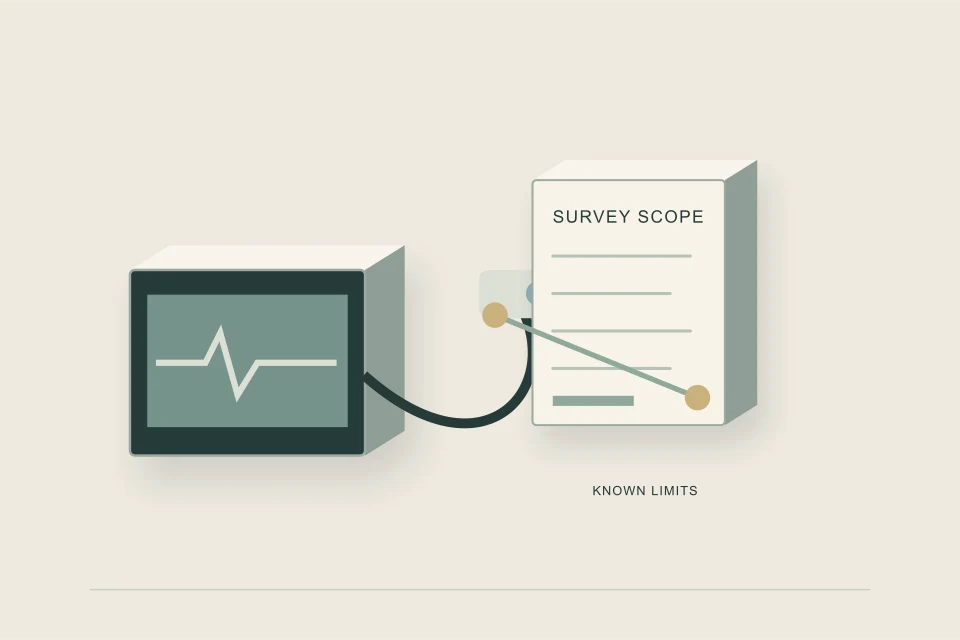
A useful term helps identify an asset, observation or limit. It does not replace the footage or a qualified assessment. Ask the provider how the term was used in your own scope and where the evidence appears.
01 /Use the term with its record
Pair a pipe description with a route or asset identifier. Pair an observation with the relevant distance and recording interval. This makes a later discussion about the same evidence possible.
02 /How do commercial sewer terms help a manager compare work?
A term is useful when it connects a task, asset or observation to a record. Keep the wording consistent across the scope, recordings and invoice. If a bidder uses a term differently from another bidder, ask each to describe the actual included work. Do not resolve the difference by assuming the terminology alone proves that the two prices cover the same job.
This glossary combines drainage language with practical scope and records terms. It is a planning aid, not a code definition or an engineering specification. Ask the provider or intended technical reviewer to confirm the meaning it needs for your project. Responsibility, permits and wastewater requirements must be checked against the applicable property documents and current authority guidance.
A–ZTerms
- Access point
- The location the qualified provider proposes to use to begin a survey or cleaning task. Describe whether it is known, visible, restricted or uncertain. Do not open hazardous access to improve an enquiry’s level of detail.
- Approval boundary
- The limit of the work an identified person may authorize. State who approves added cleaning, locating or another visit and how approval is recorded. A site escort or key holder may have a different role from the budget approver.
- As-built record
- A record intended to describe installed work. Confirm its origin and whether later alterations are reflected. An older drawing is useful context, but the inspection brief should not silently treat it as current verified route information.
- Asset identifier
- A stable label linking the same pipe run across the enquiry, video and written report. For example, a manager can agree a building-and-run label with the provider. Consistency matters more than inventing elaborate labels without a clear map.
- Asset register
- A maintained list of the site’s requested pipe runs, structures and available records. Each item needs an identifier that can appear in a quote and report. Unknown routes or dimensions should remain labelled as unknown.
- Building drain
- The drainage run serving a building before its downstream connection, as identified in the actual survey scope. Ask the provider to describe the particular start and end points rather than using the label as complete coverage.
- Cleaning sequence
- The documented order of clearing and recording tasks. A view before cleaning and a view afterward can answer different questions. Agree what the sequence is meant to reveal and how each file will be identified.
- Completion evidence
- The records agreed to demonstrate what was done, such as named recordings, written findings and a completed asset list. Check them against the actual scope. An invoice alone may not contain the inspection evidence the owner requested.
- Condition observation
- A description of what the provider could see in the recorded section. Keep its location and limitations with it. The observation is distinct from an interpretation, a predicted future outcome or a repair method proposed afterward.
- Coverage
- The assets and extent actually assessed by the inspection. Compare recorded coverage with the original scope and list incomplete sections explicitly. A report for one run should not be described as a survey of the whole site.
- Decision brief
- A short statement of the business or property decision the inspection should support. It can ask about repeat restrictions, missing coverage or renewal planning. The brief helps select useful deliverables without presuming the hidden cause is already known.
- Disruption plan
- The provider’s proposed approach to access, equipment setup and effects on occupants or operations. Ask which constraints could prevent completion and who communicates instructions. Do not substitute an improvised manager-written isolation procedure for a qualified work plan.
- End point
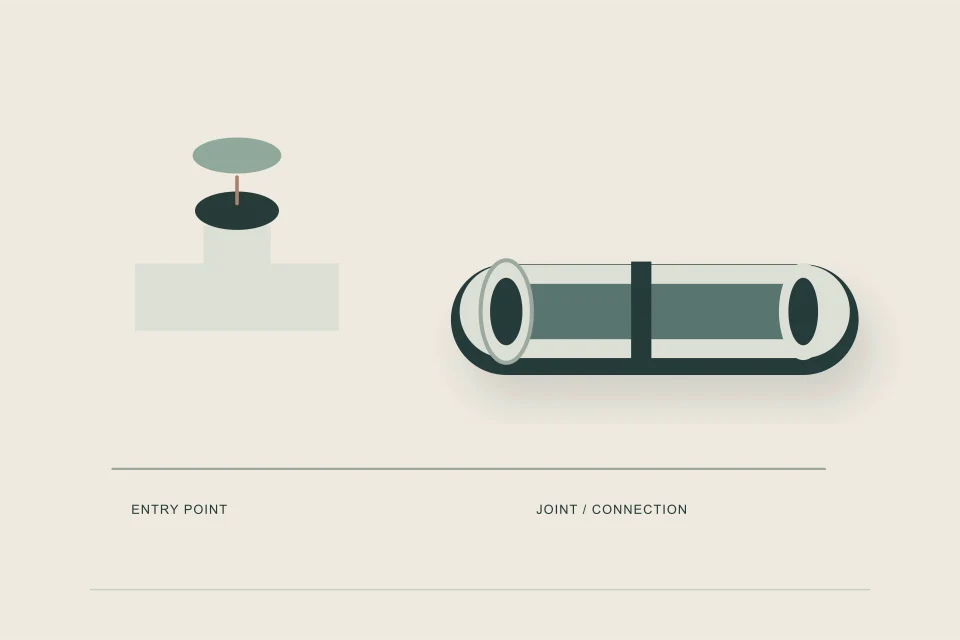
- The intended or recorded limit of a particular survey. State whether the provider confirmed that limit or inferred it. If the camera stopped earlier, identify the actual stopping point separately so missing coverage remains visible.
- Entry point
- The place where the recorded survey begins. Include its asset reference and direction in the report. Different entry points can produce different coverage, so two recordings should not be compared solely by their duration or travel distance.
- Exclusion
- A task, asset or condition outside the written proposal. Read exclusions beside the price and reporting package. Ask how an excluded item could affect the decision instead of assuming it will be handled during the visit.
- Grease interceptor
- A device associated with separating retained fats, oils and grease from wastewater in an applicable food-service setting. Its servicing record and the inspection of connected pipe runs are different deliverables; check current local guidance for the establishment.
- Incident log
- A dated record of reported symptoms, affected areas and resulting service visits. Distinguish reports from confirmed findings. The log helps a provider investigate a pattern without treating every occupant’s account as proof of one common defect.
- Kitchen branch
- The named pipe section serving the kitchen fixtures included in the scope. Identify what connects to it and where the requested task stops. Cleaning that branch does not document the condition of every downstream asset.
- Locating
- A separately specified task intended to relate a finding or route to a position at the site. Ask what was located and what the record establishes. A footage counter is not, by itself, a complete surface location record.
- Original recording
- The retained video record rather than only a highlight clip or still image. Ask for a downloadable copy labelled by asset and survey date. Keep it with the report so another reviewer can examine the same context.
- Planned maintenance
- Work scheduled using the property’s use, incident history and condition evidence. Record why the tasks and interval were selected, then review that rationale after a change. A recurring calendar appointment alone does not establish that the plan remains appropriate.
- Post-cleaning view
- A recording obtained after a defined cleaning task. It can document what became visible once the task was completed. Keep it distinguished from the pre-cleaning condition and from any sections that still could not be surveyed.
- Private trunk
- A planning label for a larger shared private sewer run serving connected parts of a site. Confirm the actual route, assets and responsibility. The word “private” in an enquiry is not proof of a legal boundary.
- Reporting specification
- The agreed format, identifiers and evidence needed by the intended reviewer or records system. Establish it before booking. Technical abbreviations or a camera service label do not prove that a formal reporting requirement was met.
- Restoration scope
- The portion of a proposal that describes how affected surfaces or site features are addressed after construction. It is relevant to repair pricing rather than an automatic camera-survey deliverable. Ask which reinstatement tasks and exclusions are included.
- Return survey
- An additional inspection visit proposed to answer a question left unresolved during the first attempt. Ask why it is needed, what coverage it seeks and how it is priced. Record the missing section until the new evidence is available.
- Route assumption
- An unconfirmed understanding of where a pipe runs or what it serves. Label its source, such as an old plan or occupant report. The survey should distinguish confirmation from inference instead of silently carrying the assumption into a repair decision.
- Survey limitation
- A condition preventing complete or clear evidence, such as uncertain access or an obscured view. Include it beside the findings. A limitation explains the boundary of the record; it should not disappear when a recommendation is copied into a budget request.
- Tenant coordination
- Arrangements for authorized occupant entry, notifications and the relevant work constraints. Identify who communicates and who approves changes. Keep personal contacts and private access details within the appropriate request and property records, rather than publishing them with a public site outline.
- Work window
- The proposed period in which access and operations allow the contractor to work. It needs confirmation alongside occupant, vehicle and safe-access constraints. A manager’s preferred window is a request, not evidence of provider availability.