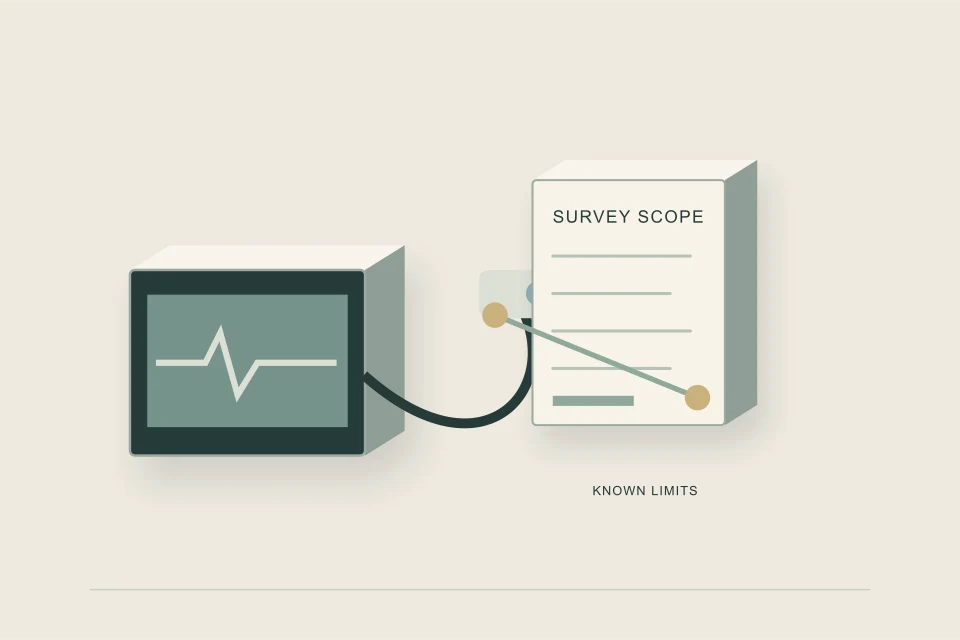
A commercial inspection starts with a defined asset list, not a camera booking alone. Identify the buildings and drains involved, accessible entry points, the section to survey and the records you need. Ask the contractor to show where the survey stopped and what remained unseen before you use it to authorize repair.
- Identify each asset and the intended survey extent before requesting a commercial camera inspection.
- Price cleaning, recording, reporting and locating as explicit tasks.
- Keep exclusions and incomplete coverage visible in the final decision.
- Retain the original recordings with the asset list and approved work sequence.
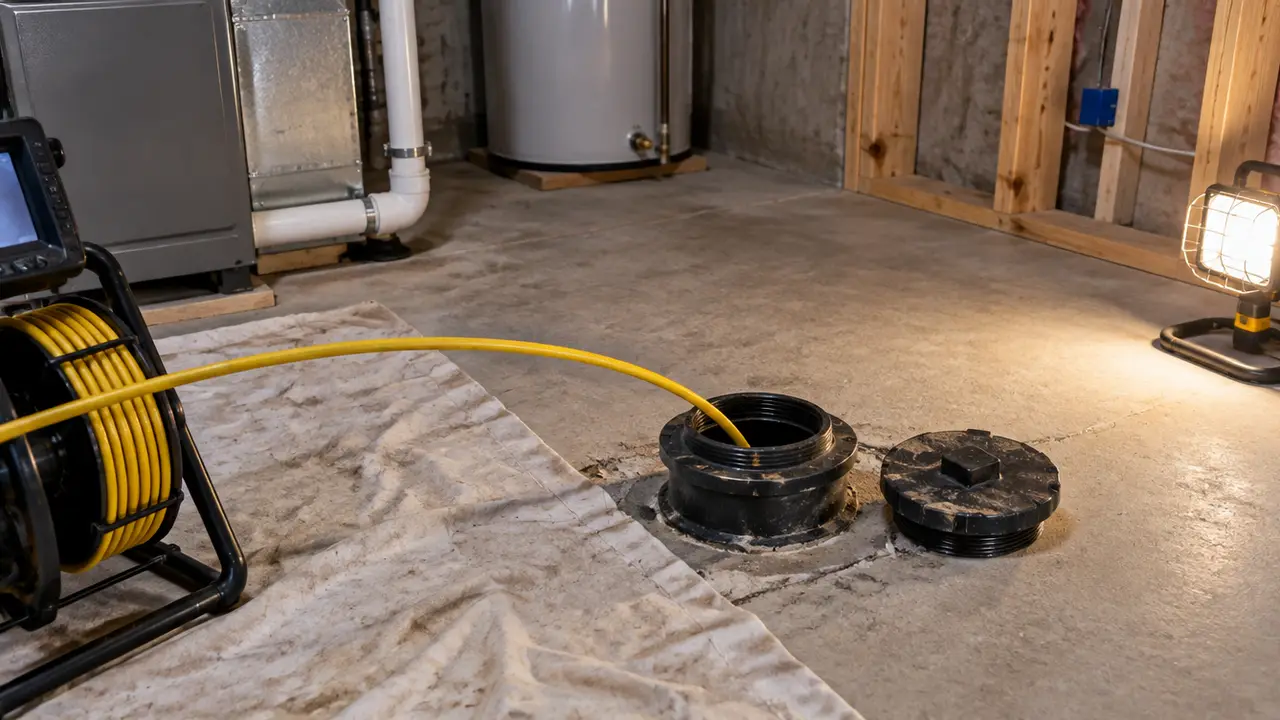
01 /Start with the decision you need to make
A recurring kitchen restriction, a planned property purchase and a budget request for sewer renewal need different evidence. Write the question first: is cleaning restoring flow, is a particular section structurally damaged, or is a shared private network due for a broader survey? The answer determines access, equipment and reporting.
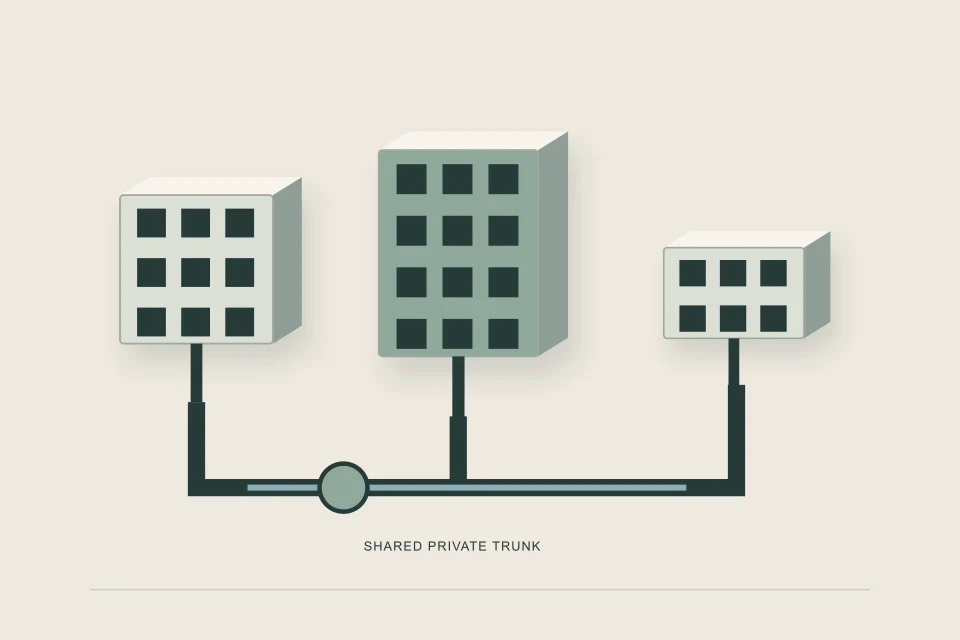
A camera appointment can cover one building drain while leaving the site trunk unseen. Make a simple asset list with known pipe runs, buildings served, previous work and missing drawings. Mark assumptions as assumptions. Ask how each asset will be identified in the recording so two surveys can be compared later.
02 /Agree on coverage and access
| Specify | Why it matters |
|---|---|
| Start and end point | Prevents an ambiguous “line inspected” claim |
| Accessible cleanouts or manholes | Determines practical equipment and set-up |
| Flow and occupancy constraints | Determines whether cleaning or isolation is needed |
| Excluded sections | Keeps inaccessible assets visible in the decision |
Supply photos of accessible covers from a safe location, site drawings if held, and any restrictions on vehicle access or tenant entry. Do not remove covers, enter pits or reach into equipment to improve a quote. Confined-space work requires a properly equipped, trained team.
03 /Ask for evidence you can use
Request the original recording, a written summary, a route or asset identifier, distance references and explicit limitations. If coded reporting is needed for an engineer, insurer or asset system, agree on its format before work starts. A residential push-camera summary may not satisfy a formal asset survey specification.
Keep the raw records and the repair recommendation separately. A contractor may propose a method, but the owner should be able to see the observations supporting it. Where footage is obscured by water or debris, ask what further cleaning or investigation could answer the unresolved question.
04 /How do you build an asset list that bidders can follow?
An asset list turns a broad commercial inspection request into named pipe runs and explicit questions. Begin with the building or site plan already held by the owner, then mark the sections you want assessed. Give each run an identifier, such as the kitchen branch, Building A drain or shared downstream trunk. Those are example labels rather than technical classifications. Keep the same labels in the enquiry and report so someone who did not attend the visit can understand which records belong together.
For each item, state the known starting access, intended end point, users served and source of the route information. A drawing from a previous renovation may be a useful starting point without being a verified as-built record. Label the route as drawing-based, reported or confirmed, as appropriate. Include unknowns in their own column. This avoids accidentally treating a missing diameter, assumed connection or buried access point as a promise that the inspection can proceed as planned.
Separate sanitary sewers from other drainage assets in the scope. Do not assume that a nearby cover or low-point drain connects to the run you want inspected. Ask the provider what confirmation is needed to identify the correct system. If several building connections meet a shared trunk, specify whether each connection needs its own survey. “Inspect the property” is too broad to tell an estimator how many starts, access arrangements or recordings are intended.
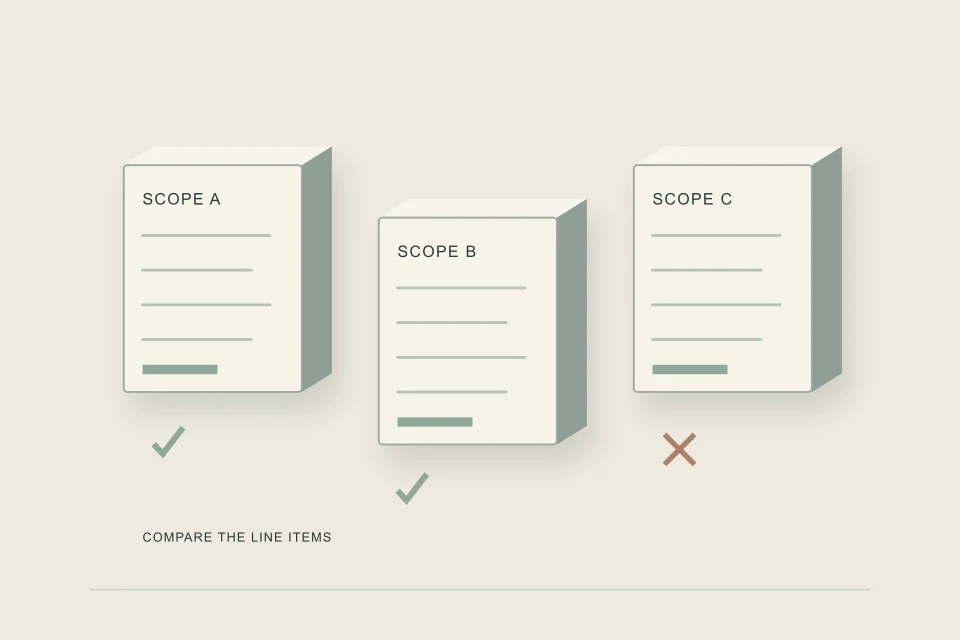
A simple first enquiry does not require a finished engineering inventory. It should expose the owner’s assumptions and make the proposed coverage reviewable. Ask the bidder to return a marked list of included assets, excluded assets and tasks needed to resolve access. That marked list becomes a practical comparison document. If the job later expands, update the list and approval record rather than silently treating the new section as part of the original fee.
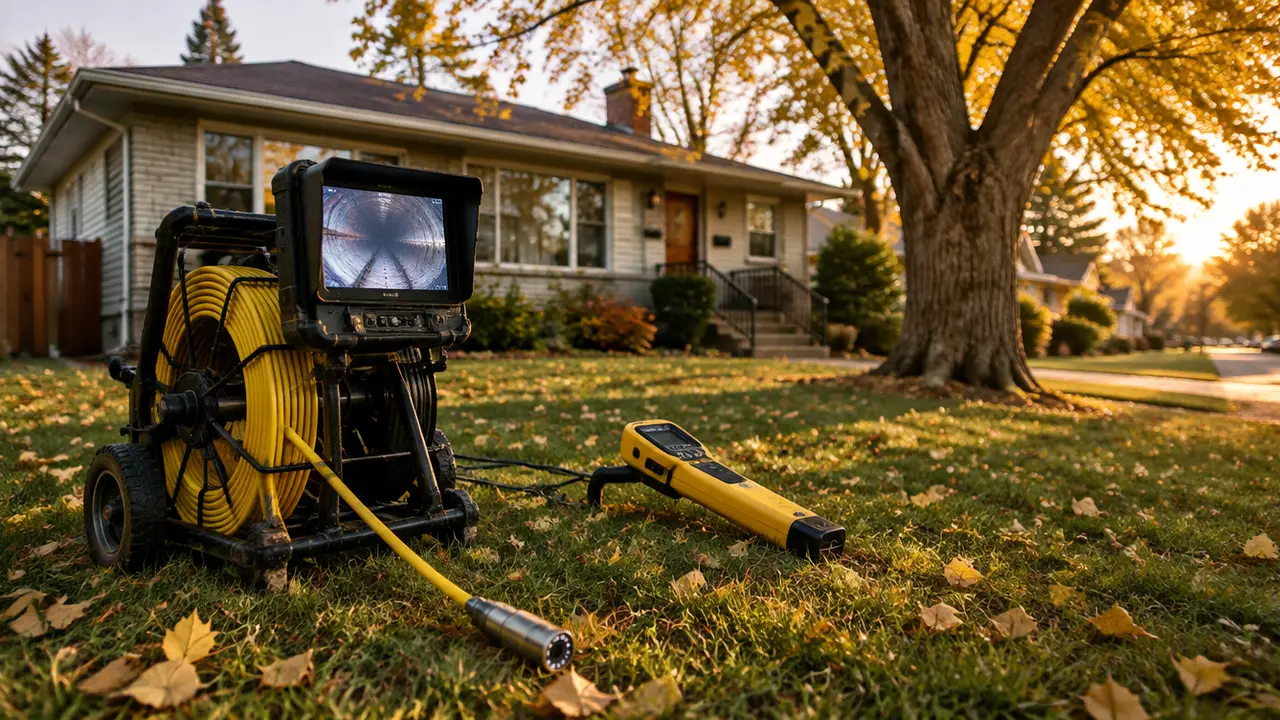
05 /When are cleaning and inspection separate parts of the scope?
Cleaning and inspection are separate tasks even when one enables the other. The inspection request should say whether the objective is to record the existing restriction, obtain a clearer condition view after cleaning, or do both in a documented sequence. The provider should confirm what is feasible at the property. A final recording made after a line has been cleared answers a different question from a recording of the original blocked condition.
Discuss the approval boundary before work begins. Ask what happens if the first view is obscured, if the camera cannot pass a restriction, or if another access point is needed. The answer might be a priced additional task, a return visit or a report explaining incomplete coverage. What matters is that the owner knows which decision is being requested. Do not let “camera inspection included” become an open-ended authorization for unrelated cleaning or construction.
For a restaurant property, distinguish interceptor servicing from the branch pipe and downstream sewer work. Keep the relevant service records available, but do not presume those records document the entire drain network. The grease-line guide explains how to describe the tasks independently. Specific local wastewater obligations should be checked against current City guidance. A camera contractor’s recommendation is not a substitute for confirming the establishment’s applicable requirements.
Ask how any interruption in the inspection will be shown in the recording and report. If a run is cleaned between two recordings, both files should be identifiable by asset and sequence. If only the completed portion is recorded, the report should identify the section still unseen. A record of restored use should not be described as a complete structural survey unless the actual inspection coverage supports that claim.
06 /What reporting format do you need for the next decision?
Specify the reporting format by its intended use, rather than asking for the most elaborate report by default. A manager comparing cleaning options may need a clear written summary and usable footage. An engineer planning a larger renewal may require a formal specification, named coding convention or asset-system format. Ask the intended reviewer what it needs before booking the survey. A report cannot be assumed suitable for every audience just because it contains technical abbreviations.
Request an asset identifier, entry point, direction, recorded extent and clear references for findings. Agree how the original video will be supplied and retained. Still images should point back to an interval in that video, not become the only evidence available. If a surface location or depth is required for the next stage, discuss that as a distinct deliverable and ask how it will be documented. The footage counter alone should not be treated as a surveyed excavation location.
The written summary should distinguish observations from recommendations and list limitations next to the conclusion. Ask whether the view was affected by water, debris, access or an interrupted run. If the provider describes a defect as significant, ask which record supports that description and what further information is needed to select a repair. A useful record can explain why the current evidence does not yet justify a particular method.
Plan who receives the files at completion. Give the owner or managing organization a durable copy, rather than leaving the records only with the contractor who performed the work. Agree whether a link expires and how files should be named. Use the asset identifier and survey date in the property record so a later manager can find the right version. Avoid publishing tenant names or unrelated private property information in material intended for wider circulation.
07 /How should access and disruption be agreed?
Access and disruption should be agreed as part of the inspection plan, with an authorized decision maker identified. Give bidders the operating hours, delivery restrictions, keys or escort process and any occupant access required. The contractor should explain the intended equipment setup and work sequence. Ask which constraints may prevent the proposed survey, rather than assuming a preferred time slot ensures the work can be completed.
Keep safe preparation separate from work that exposes a hazard. You can describe a locked gate, visible access point or vehicle route from an ordinary safe location. Opening covers, entering pits or making plumbing alterations is not a quotation task for the property manager. CCOHS identifies confined spaces as requiring their own assessment and controls. If the proposed access involves such work, ask the provider to explain the applicable plan and qualifications.
For an active incident, a scheduled condition survey may not be the immediate first service needed. Keep occupants away from contaminated areas and wet electrical equipment. In Calgary, 311 can assess possible City-side involvement. Record incident details once it is safe to do so and retain any resulting service report with the later survey. Do not use the inspection enquiry as a promise of emergency response or a reason to wait in an unsafe area.
08 /What should you check before accepting the completed survey?
Check the completed records against the agreed asset list before closing the job. Every included run should have a result: recorded, partially recorded, inaccessible or changed by an approved instruction. Ask about any asset without a result. A polished video does not fill the gap for another section that was never reached. Capture any follow-up task as an open item with a reason and an owner, rather than losing it in a general conclusion.
Read the report alongside the scope and invoice. Make sure additional cleaning, locating or visits match the approval record and that promised deliverables are available. Then identify the next decision: continue monitoring, assess a repair, obtain a clearer view or update a maintenance plan. The commercial quote comparison guide helps tie that decision to a defined proposal. You can use the scope builder to prepare the next enquiry with the new evidence.
FAQQuestions people ask
Can one commercial camera booking cover every building on a site?
Only if the written coverage, access and equipment plan include those buildings and connections. Request an asset-by-asset included and excluded list rather than assuming the address defines the whole survey.
Is cleaning automatically part of a commercial sewer inspection?
No. Specify whether cleaning is included, which sections it covers, how it is authorized and whether the survey records the condition before cleaning, after cleaning or both.
Do I need a formally coded report?
Ask the intended engineer, asset manager or other reviewer what format the decision requires. Agree on that format and provider capability before commissioning the survey.
What if the camera stops before the planned end point?
The report should identify the stopping point and limitation. Agree whether another access, cleaning task or return survey is appropriate before calling the coverage complete.
NETWORKGo deeper across the HAUSE Sewer network
CCTV sewer inspection: crawlers, lateral launch cameras and coded surveys
What CCTV sewer inspection is: crawler cameras, lateral launch and zoom cameras, PACP-coded municipal surveys, and what city camera work means for your lateral.
SewerQuotes.comSewer camera inspection cost, and what the fee should include
Sewer camera inspection cost in Canada for 2026: standalone, pre-purchase and add-on scope prices in CAD, what a proper report includes and when the fee is wasted.
SewerJetting.caCommercial and municipal sewer jetting: combination trucks, interceptors and schedules
Commercial sewer jetting explained: jet-vac combination trucks, high-flow mains cleaning, restaurant grease lines, interceptors and confined space rules.