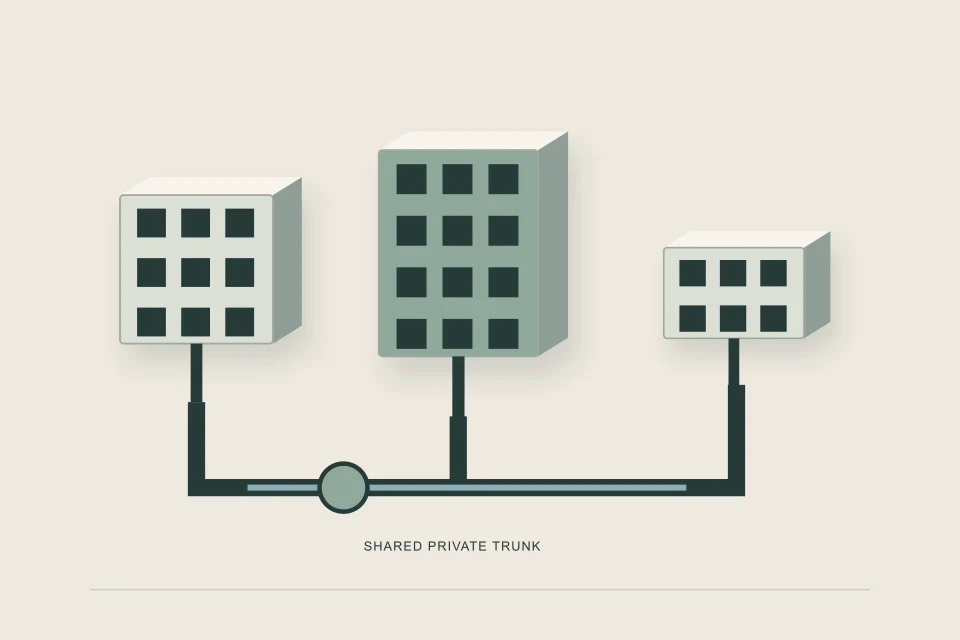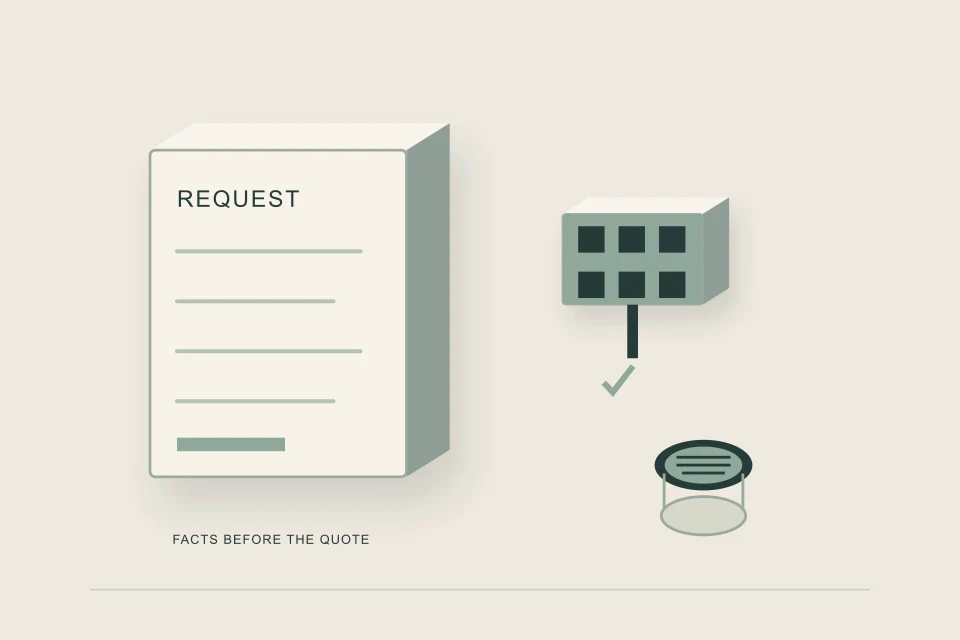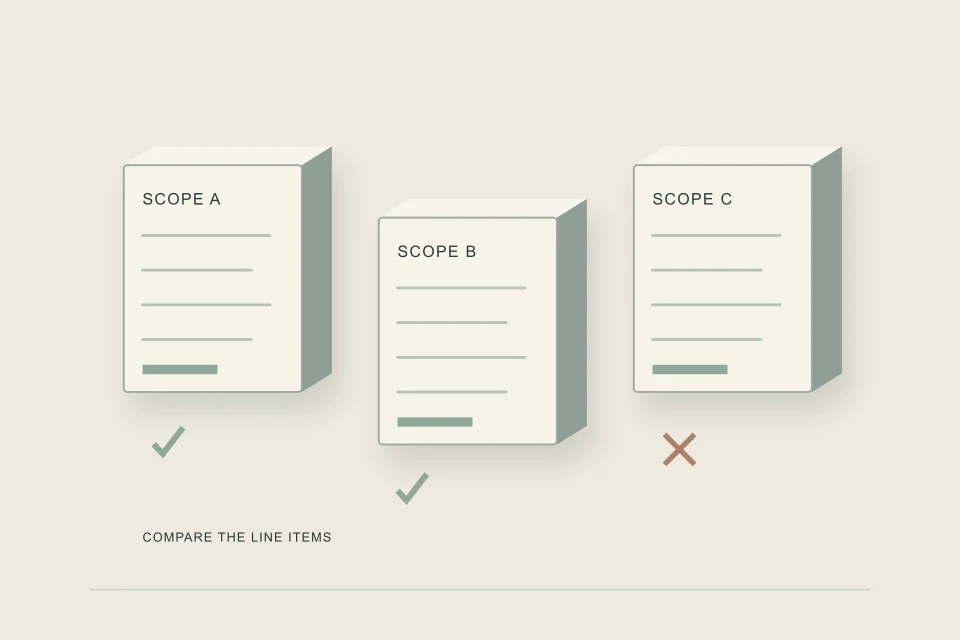
Compare commercial quotes only after the assets, deliverables and access assumptions match. A low price for one accessible line cannot be compared directly with a multi-building survey and formal reporting. Ask each bidder to identify what is included, what triggers an extra charge and how completed work will be documented.
- Compare the same assets and deliverables before comparing totals.
- Mark an unstated item as unresolved, rather than included.
- Write the approval process for extra time and changed work.
- Specify completion files, restoration and practical access responsibilities.

01 /Normalize the scope before the totals
Put each quote into a simple comparison sheet: assets covered, cleaning limits, survey limits, equipment assumptions, reporting, work window and taxes. Mark an item “not stated” rather than guessing it is included. Ask the bidder to clarify in writing.
Distinguish a fixed scope from time-based service. Where access or condition is uncertain, ask how extra time is approved and what evidence supports the change. An open-ended instruction to “do whatever is needed” leaves the owner without a useful approval boundary.
02 /Include the cost of interruption
An after-hours window, building isolation, traffic controls and surface access can change the practical cost. Ask what the owner must supply, whether any tenant notice is required and who handles reinstatement. For excavation, restoration should identify the actual surfaces rather than say “backfill included.”
Do not accept a replacement recommendation solely because a cleaning attempt failed. Ask for the recording, the unresolved limits of the inspection and the observation supporting the method. A second opinion can focus on that evidence rather than starting the whole job again.
03 /Approve a result you can verify
Specify completion evidence in the authorization: the line segment, any recording, the written findings and the treatment of exclusions. Keep invoices, approvals and records together so a later manager can understand the decision.
Use the commercial brief builder to collect the first set of assumptions. It carries your choices into the quote request for review. HAUSE is an information and request service, not the contractor performing the work; availability and the final scope must be confirmed.
04 /What makes two commercial sewer quotes comparable?
Comparable quotes describe the same requested result for the same identified assets. Start with the owner’s brief: runs, access, purpose, work window and required files. Send the same information to each bidder with permission to review the supporting records. If one bidder proposes a different sequence, ask it to explain the reason and how that affects the result. A camera-only visit and cleaning followed by a defined survey are different scopes even at one address.
Create a comparison with a separate column for each provider and a row for each required item. Use “not stated” when wording is absent or ambiguous. Then request clarification without filling the gap from an assumption. Keep dated versions of the bids and replies. A corrected scope may change the total, but it also makes the owner’s eventual approval traceable and prevents a later argument over what the short quote description was intended to include.
05 /Which bid differences commonly need written clarification?
| Item | Compare this detail | Why it matters |
|---|---|---|
| Assets | Named runs and start/end references | One accessible run is not a multi-building survey |
| Cleaning | Purpose, extent and sequence | Clearing passage differs from preparing a useful camera view |
| Recording | Original files and coverage statement | An edited highlight may omit the inspection limit |
| Report | Narrative or specified coded package | The intended reviewer may require a defined format |
| Access | Keys, vehicle space and special entry arrangements | Owner-supplied preparation can affect completion |
| Additional work | Approval contact and written change process | Unresolved conditions should not create unlimited authority |
| Completion | Evidence, exceptions and restoration limits | The owner needs an identifiable result to review |
Do not score the total while material differences remain unresolved. A lower scope can be appropriate if it answers the owner’s immediate question, provided its limits are understood. Ask each bidder to distinguish the base task from optional investigation or construction. The goal is a deliberate choice of result, not forcing every provider into one method when the actual evidence suggests alternatives.
06 /How should fixed, time-based and investigative scopes be handled?
Handle each pricing structure according to what it authorizes. A fixed proposal still needs boundaries and exclusions. A time-based service needs the rate basis, minimum terms, included tasks and the approval process for additional time. An investigative appointment needs a defined question and a record of the findings, even when the subsequent repair cannot be priced in advance. Request those distinctions in writing without assuming one structure is always preferable.
Ask what happens if access fails or the camera cannot complete the requested extent. Is the attempted visit itself chargeable under the provider’s terms, and what evidence will still be supplied? Who can approve appropriate clearing or a different access approach? State the authorized contact and have changed work documented. An owner’s maximum approval should not silently become an instruction to perform unrelated tasks up to that amount.
07 /Which operational costs belong beside the contractor’s total?
List the site arrangements required to carry out the proposed work. These may include an agreed operating window, tenant access, vehicle space or provider-specified flow restrictions. Ask who is responsible for each item and whether it is included. NASSCO describes flow management as a consideration in rehabilitation work; if a provider proposes a bypass, request its actual scope and responsibilities rather than assuming the business can keep operating normally.
For physical restoration, name the affected surfaces and the proposed limits. A reference to backfill does not identify the treatment of paving, landscaping or interior finishes. Keep restoration questions linked to the provider’s assessed method and access, not an assumed excavation path. Where specialist access involves a manhole or vault, have the provider explain its safe plan. Owner-supplied access should never mean staff entering a confined space to reduce the quoted work.
08 /How can you assess a repair proposal without choosing from the headline?
Ask the bidder to connect the method to the recorded condition and the information it still needs. Request the relevant asset, interval and intended repair limits. If the proposed work depends on a locate, clearer view or uninspected connection, identify that prerequisite. The quote should distinguish observed evidence from assumed construction conditions. Do not treat an unsuccessful clearing attempt alone as a complete justification for replacing every section.
Compare practical alternatives by their purpose and limitations, not by generic method labels. Ask what each option is expected to address, what it leaves outside scope and how completion will be documented. Where the record cannot resolve a material disagreement, consider a qualified review focused on that gap. Keep any later revision with the original rationale so the owner can explain why the approved scope differs from the first proposal.
09 /What should be agreed before the owner authorizes work?
Agree the asset list, result, access arrangements, deliverables, payment terms and process for changes. Identify the contact who can approve a revised scope during the visit and how approval is recorded. Require the completion record to show actual extent and exceptions. If a specified assessment format matters to a board or engineer, confirm it before the survey; NASSCO program names alone do not prove the proposed provider’s credentials or that format’s inclusion.
Retain the selected quote, clarifications, authorization, changed-work records and final evidence together. A later manager should be able to see the decision without contacting everyone involved. Prepare the common brief using the commercial builder, then review the editable outline in the quote request. HAUSE collects the enquiry for team review; the responding provider must confirm capability, availability and its own written terms before the owner relies on a job being booked.
FAQQuestions people ask
Is the lowest quote necessarily missing something?
No. It may describe a smaller task, different assumptions or a different commercial arrangement. Check the asset list, cleaning sequence, survey extent, reporting and access obligations before drawing a conclusion. Ask about unstated items in writing. Choose a scope that answers the actual decision, and compare totals once material differences are understood rather than assuming every low or high price implies quality.
Should a quote include footage and a report?
Include them explicitly when they are needed for the decision. Specify the original recording, written findings, coverage and limitations, plus any required data format. Ask how and when files are delivered and retained. A provider can price a narrower service without those outputs, but the owner should know it is not equivalent to a documented condition survey for an asset-management or repair review.
How do we handle an unexpected condition during the visit?
Have the provider describe the finding, proposed additional task and effect on the scope before the authorized contact approves it. Keep the record of that change with the completion files. Where an active hazard requires appropriate urgent assistance, follow the site response plan. A general maintenance enquiry should not be interpreted as unlimited authority to carry out unpriced construction.
Can the commercial builder produce a contractor’s quote?
It produces an editable enquiry outline from your selected context and purpose. It does not assess the buried assets or calculate a binding price. Use it to make the same evidence and assumptions clear to the team. A responding provider must evaluate the actual site and confirm scope, terms and availability; preparing the outline does not place an order or authorize work.
NETWORKGo deeper across the HAUSE Sewer network
How to compare sewer quotes line by line
How to compare sewer quotes: a line-by-line worksheet to normalise scope, spot missing items, convert to per-metre cost and choose between three contractor quotes.
SewerInspector.caWho does sewer scope inspections, and how to choose one
Who does sewer line inspections, how to find a sewer camera inspection company near you, what to ask before booking, and the red flags to watch for.
SewerRoots.caSewer root removal cost in Canada: cutting, chemicals and permanent fixes
Sewer root removal cost in Canada for 2026: planning ranges for cable cutting, jetting, camera, lining, bursting and replacement, plus cycle-versus-fix math.