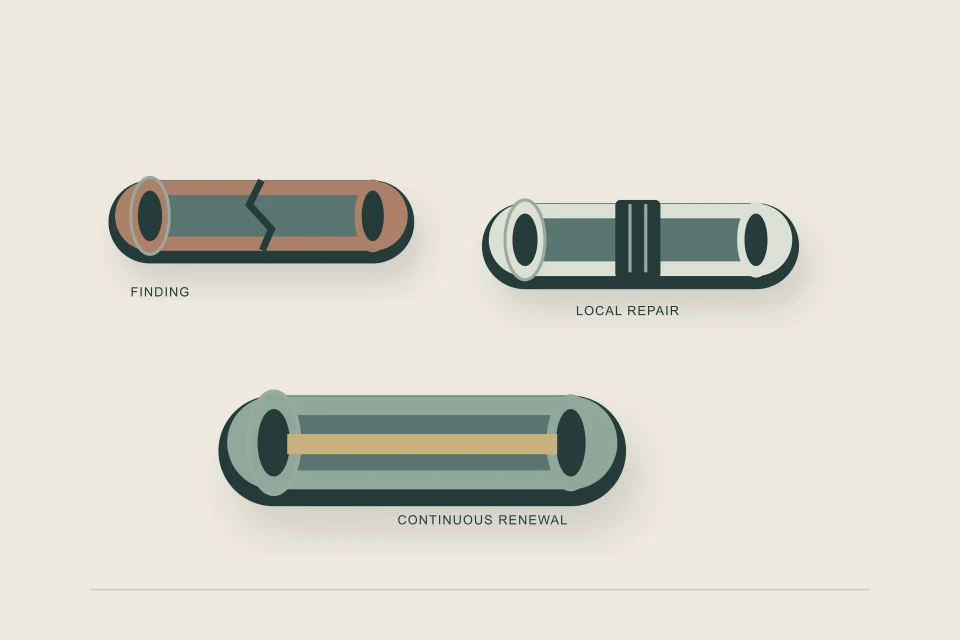
A commercial repair decision should connect the observed condition and actual asset to a defined repair objective. Ask the qualified provider which methods can meet that objective, what each leaves unresolved and which site information is still needed. Compare access, flow arrangements, restoration and completion evidence before authorizing construction.
- Use recorded findings rather than age alone.
- Separate clearing, investigation and construction objectives.
- Ask how each method addresses the actual condition.
- Keep repair limits and completion records tied to named assets.
01 /What evidence should start the repair discussion?
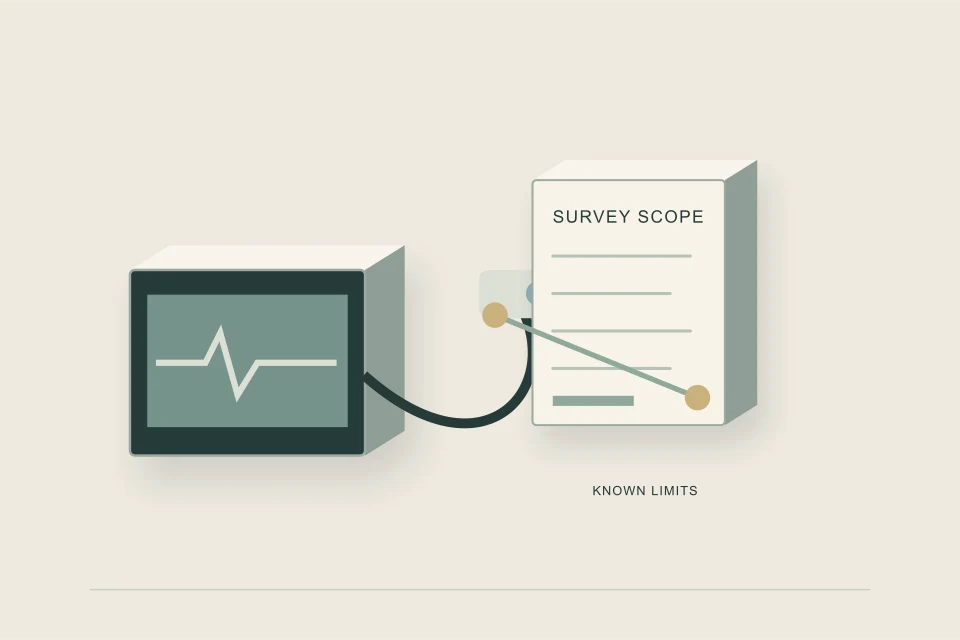
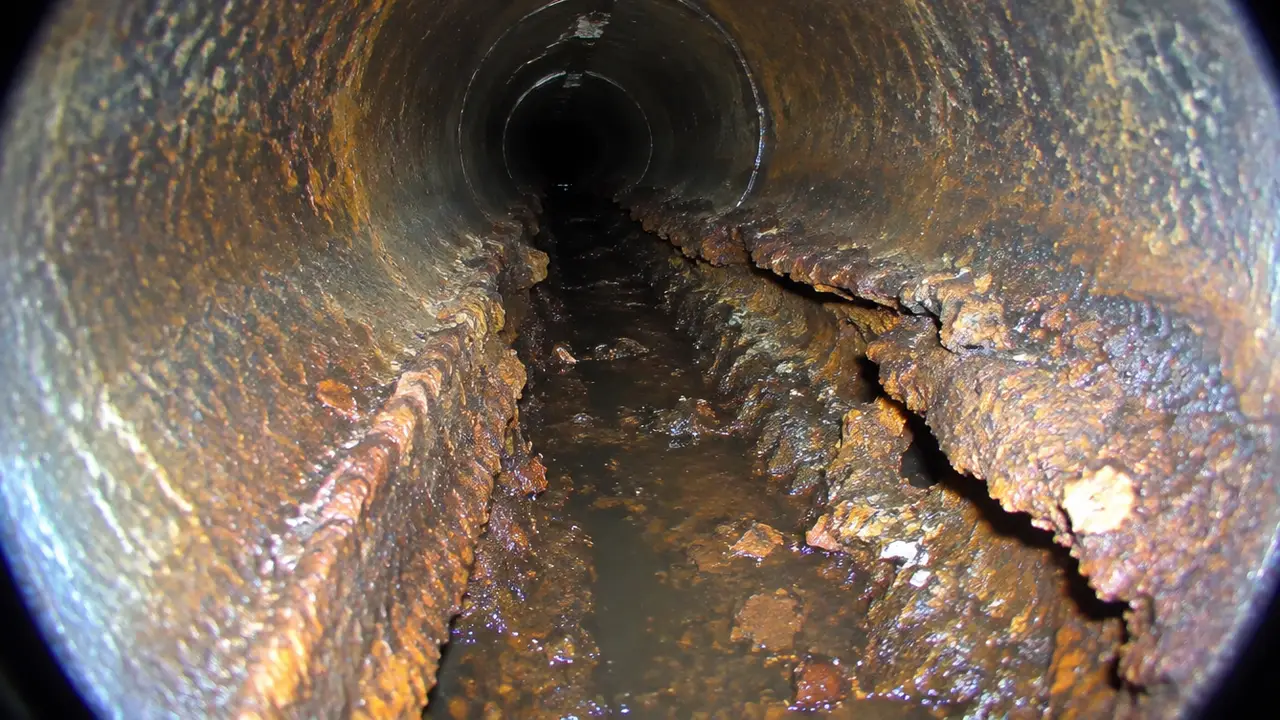
Start with an identified asset, a recorded observation and the decision it affects. Ask where the survey entered, which section was actually seen and what limited the view. A reported crack, root entry or displaced joint needs its location and context. A statement that the sewer is old, or that clearing was difficult, does not supply a complete condition record for every run on a commercial property.
Keep the original video and written findings with the relevant service history. Distinguish an observed condition from the provider’s interpretation and proposed work. Where the camera stopped before the intended endpoint, retain that gap rather than assuming the remainder has the same condition. The first decision may be a defined further investigation that improves the evidence before the owner commits to a repair method or site-wide construction scope.
02 /How do cleaning and rehabilitation address different questions?
Cleaning addresses the task suited to the deposits or obstruction; rehabilitation or replacement addresses an assessed repair objective. A line can flow after clearing while a visible concern remains unresolved. Ask the provider what its proposed task changes and what record will demonstrate the result. Do not interpret repeated passage restoration as proof that no structural assessment is needed, or as proof that every pipe must be replaced.
NASSCO describes several rehabilitation technologies and emphasizes assessment before method selection. Cured-in-place pipe creates a lining within an existing host; pipe bursting replaces an old route by pulling a new pipe behind a tool. These are general mechanisms, not a suitability decision for your site. The provider must explain whether the actual condition, geometry, connections and access support its proposal and which alternatives remain practical.
03 /Which questions should accompany a proposed method?
| Proposed task | Question for the provider |
|---|---|
| Further cleaning or inspection | What missing condition view will it obtain? |
| Localized repair | Which recorded interval and surrounding limits does it address? |
| Lining | What host condition, preparation and connection information is required? |
| Trenchless replacement | What access, route and service reconnection assumptions apply? |
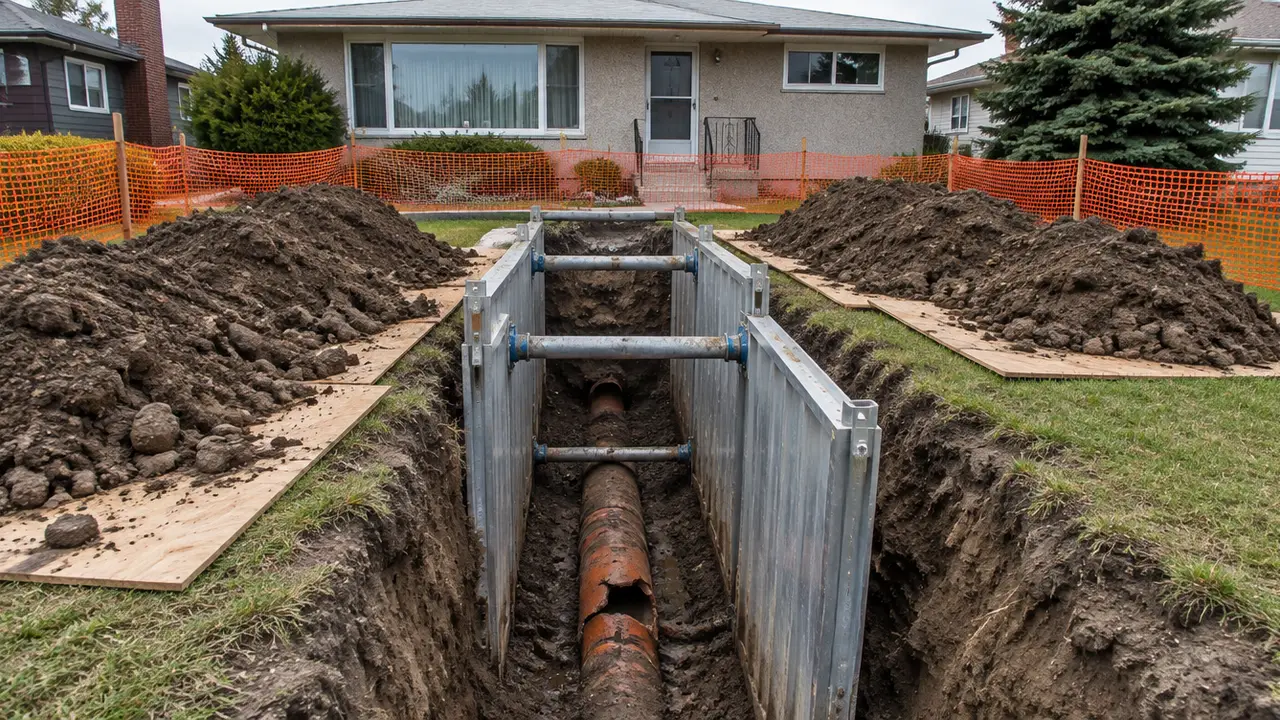
| Open replacement | Which physical work limits and surface restoration are included? |
| Maintenance pending a later decision | What remains unresolved and when should the plan be reviewed? |
Ask the provider to explain the actual project-specific limitation, not only a method’s general benefit. A lower-interruption approach can still require access work and operating restrictions. A local proposal can leave other assets outside scope. The owner should understand those boundaries before comparing totals or relying on a construction option to address an unrecorded section.
04 /What site information can change the repair choice?
The choice can change when actual access, route or connected-service information differs from an assumption. Ask what has been located, which assets are shared and which drawings are verified. A camera travel reference is not a complete physical work position. If a method depends on another condition view, site measurement or locate, name that prerequisite and have the provider explain how it affects the decision.
Also identify operating constraints and the surfaces potentially affected. A warehouse yard, occupied service room or shared tenant run can require a different work sequence from a single accessible connection. The qualified contractor must define the technical and safe-work requirements. For proposed ground disturbance, consult the appropriate utility-safety process, including Utility Safety Partners information in Alberta; one sewer finding does not locate every other buried asset.
05 /How should low areas or alignment concerns be discussed?
Discuss the observed geometry and the result the selected method is expected to achieve. If the report describes water retention or a suspected low area, ask what evidence supports that interpretation and what remains unmeasured. A method name by itself does not explain whether an alignment concern is addressed. Request the provider’s reasoned scope rather than assuming a new inner surface automatically resolves every condition along the route.
Keep the relevant recording interval and any additional assessment with the proposal. In an illustrative decision packet, an owner may hold clear evidence of a joint concern but only an obscured view of another section. Those are different evidence states. Ask whether the quoted limits resolve the first concern while leaving the second open, or whether further investigation is required before the method can be selected. Do not merge both into an unsupported whole-network verdict.
06 /How do business interruption and restoration affect the decision?
They affect the practical result of the proposal, alongside its technical purpose. Ask what operating restrictions the provider requires, how shared occupants are informed and who confirms service restoration. A method described as trenchless can still involve entry points, equipment space and connection work. The commercial flow-management guide helps the owner provide relevant operating facts without trying to design the technical arrangement.
For restoration, name the actual affected surfaces and who is responsible for each. A generic backfill statement does not specify paving, landscaping or interior finishes. Keep authority processes and required tests separate from the condition recording. Calgary’s connection guidance describes installation inspection responsibilities; confirm what applies to the actual private work. Do not mistake a camera report or an attractive illustrated method for formal approval to construct.
07 /What should the owner compare before approval?
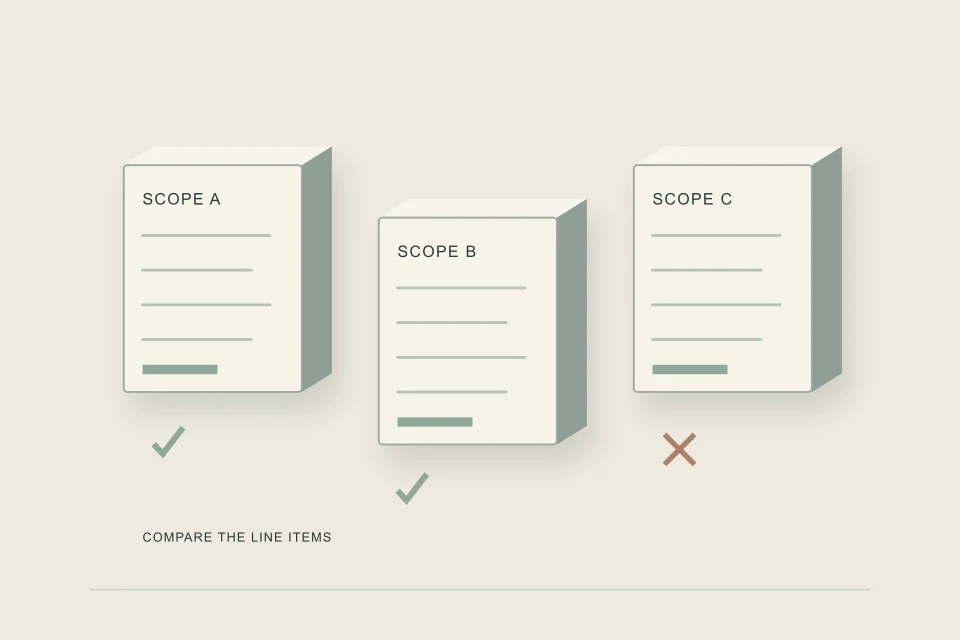
Compare the repair objective, asset limits, prerequisites, work sequence, operating impact, restoration, exclusions and completion evidence. Ask each provider which unresolved fact could change its proposal. Retain the original recommendation, clarified scope and approved changes. For a board or owner group, present those items with the supporting record rather than seeking approval from a total and an unfamiliar method label alone.
Where proposals disagree materially, a qualified review can focus on the relevant footage and reasoning. The reviewer may identify an evidence gap instead of endorsing a method. That can be a useful result if it prevents the owner from authorizing a scope built on an unconfirmed route or obscured view. Keep the review’s limitations with the decision; do not select one favourable sentence and present it as a certification of every asset.
08 /How should the repaired asset be closed out?
Agree completion evidence before work begins: actual work limits, original recording where applicable, written findings, specified tests and relevant authority records. Link the finished record to the same asset identifier used in the proposal. Document exceptions and uninspected portions, and retain the provider’s written warranty terms. A completion packet should explain the visible result without claiming an exact remaining life or future performance of the whole property.
Prepare a focused request through the commercial builder and edit the private asset, record and decision details in the quote form. HAUSE helps organize the enquiry; it does not design the repair, perform the construction or issue a property-specific engineering opinion. The responding qualified provider must assess suitability, confirm availability and supply its actual written terms before work is authorized.
FAQQuestions people ask
Does every old commercial sewer need replacement?
No. Age can be context, but the decision needs actual condition evidence, service history and a defined objective. Ask which assets were inspected and what the proposed method addresses. Keep unrecorded sections unresolved. A qualified provider should explain practical options and missing information rather than convert the building’s age into a site-wide construction instruction.
Is lining always the least disruptive option?
Do not assume a universal result from the method name. Ask about host preparation, access, connected services, operating restrictions and completion evidence for the actual project. Compare those requirements with practical alternatives. A provider must assess suitability; a generic illustration or another property’s outcome does not establish that the same method can meet your site’s objectives.
Can a camera finding supply a final repair price?
It can support a proposal, but access, location, method prerequisites and restoration may still need assessment. Ask the contractor which assumptions are confirmed and which can change the scope. Keep the inspection and construction offers identifiable. A single counter value or screenshot is not a complete physical work plan.
What if the board needs to approve work before every question is resolved?
Present the confirmed evidence, open items and staged decision clearly. A defined investigation can be a separate authorization from the later repair. Ask qualified advisers what information is necessary for the actual approval. Do not hide material uncertainty in a confident summary or treat a preliminary enquiry as unlimited permission to construct.
NETWORKGo deeper across the HAUSE Sewer network
Pipe Method Matcher: which cleaning methods suit your pipe
Pipe Method Matcher: enter your house era, pipe material and symptom to see which pipe cleaning methods are recommended, safe with conditions, or avoid.
SewerInspector.caLateral defect map: plot your sewer inspection findings
Turn a sewer camera report into a strip map: enter footage-counter distances, defect types and depths to see where each finding sits and how urgent it is.
SewerCleaners.caSewer Maintenance Planner
Sewer Maintenance Planner: a suggested cleaning and camera inspection interval plus a 12-month checklist based on your house, pipes, trees and history.