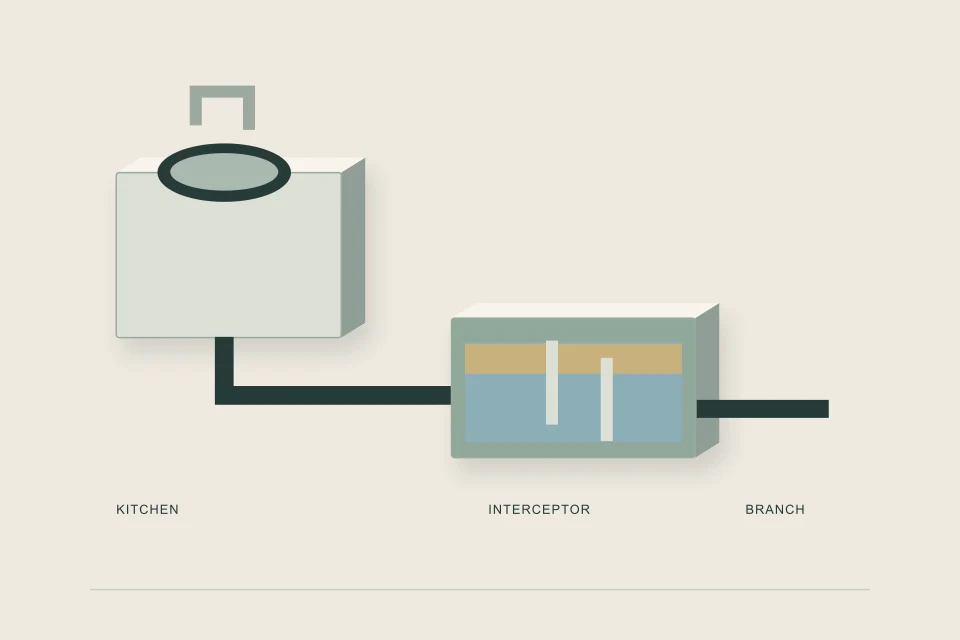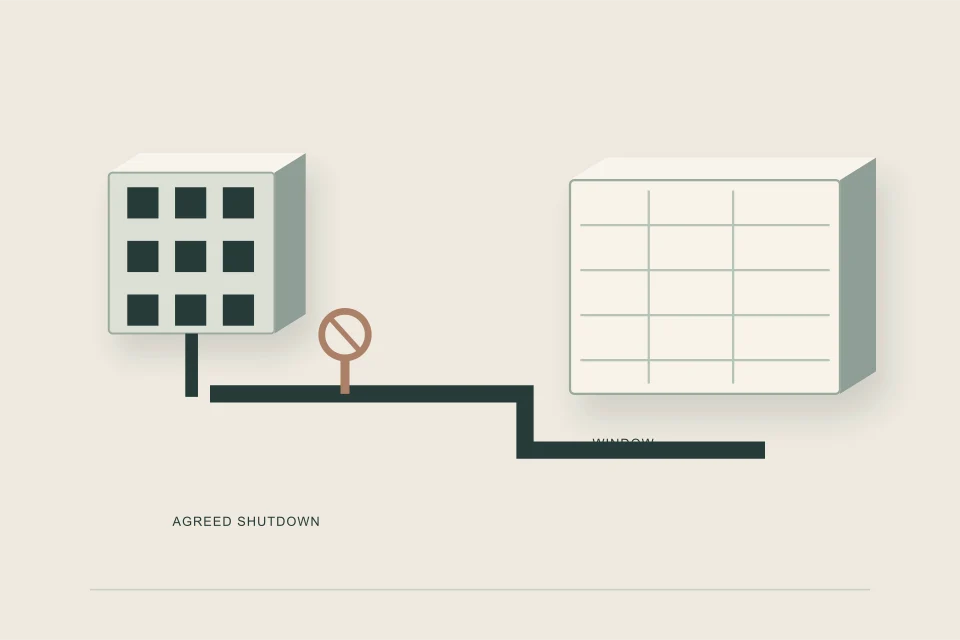
Flow-management planning defines what happens to wastewater while the agreed sewer work is performed. A qualified provider must assess the actual flow, assets, access and work sequence. The owner supplies operating constraints and authorized contacts, then confirms restrictions, communication, contingency responsibilities and restoration of service before relying on continued business use.
- Identify every operation feeding the affected run.
- Ask the provider whether restrictions or a designed bypass are needed.
- Agree who communicates changes and approves the work sequence.
- Reopening should follow the provider’s actual completion instructions.

01 /What does flow management mean for a commercial sewer job?
Flow management means planning how wastewater use and the affected sewer route will be handled during the work. It may involve provider-specified restrictions or a professionally assessed temporary arrangement. Do not assume a cleaning, camera or repair appointment leaves every connected operation free to continue. Ask the provider which part of its work sequence depends on controlling flow and which areas of the property are affected.
A planned operating window is part of that discussion, not a technical design by itself. A closed restaurant may still share a downstream run with occupied premises. A business park may have several buildings contributing to a private trunk. Provide the known connections and label uncertain ones. The provider must determine the practical requirements; the manager should not prescribe plugs, pumps or operating limits from the portal’s illustration.
02 /When might a provider discuss bypass pumping?
A provider may discuss bypass pumping when the actual scope needs flow routed around an affected section. NASSCO describes bypass arrangements as site-specific systems requiring appropriate capacity, access and contingency planning. A proposed bypass should identify the scope and responsible provider rather than appear as an unexplained equipment item in the quote. The owner needs to understand the operating implications without attempting to design or run it.
Ask what information the provider requires about the site and the work duration. NASSCO’s overview identifies flow conditions, line size, depth, duration and access among relevant inputs. Unknowns should be assessed, not replaced with a universal pump selection. If the provider proposes a different sequence instead, have it explain how that changes business restrictions and completion. An after-hours preference does not establish that a bypass is unnecessary or that one generic arrangement is suitable.
03 /What should the business contribute to the flow discussion?
| Owner information | Provider question |
|---|---|
| Connected operations | Which known tenants or fixtures feed the affected assets? |
| Operating timetable | Which periods have essential use and which can be discussed? |
| Site access | Where can equipment be assessed and set up? |
| Communication contacts | Who reaches tenants and confirms instructions were received? |
| Approval authority | Who can approve a revised work window or task? |
| Existing evidence | Which drawings and service records describe the actual route? |
| Unresolved connections | What must be confirmed before the arrangement can be relied on? |
The owner supplies operating facts; the qualified provider assesses the technical arrangement. Keep that distinction in the brief. A staff estimate of busy periods is useful context but is not a measured flow design. Where information is unavailable, ask what assessment is needed before confirming that the business can remain open or that all affected occupants can follow the proposed restrictions.
04 /How should tenant instructions be agreed?
Agree instructions with the provider and the authorized property manager before work begins. Identify the affected area, expected restriction, communication channel and contact for questions. Do not distribute a generic restriction that contradicts the provider’s actual plan. If several tenants share a route, confirm that each relevant operation is included. The appointment contact should know who has received the notice and who needs clarification.
For an illustrative mixed-use site, a kitchen may close while residential occupants continue using the shared system. The manager’s kitchen timetable alone does not establish a complete restriction window. The provider should assess the shared route and explain the practical work sequence. Keep uncertain connections open in the asset list. The aim is a coordinated arrangement based on the actual property, not a promise of zero downtime derived from a preferred appointment time.

05 /What contingency responsibilities need clarification?
Clarify who monitors the agreed arrangement, responds to a problem and decides whether the work sequence must change. A provider-designed bypass should have its responsibilities and contingency arrangements specified by that qualified provider. The owner should know the escalation contact and communication process without treating those notes as permission for staff to improvise repairs, enter a chamber or operate unfamiliar equipment.
Record how the provider will report an unexpected condition and obtain authorization for a changed task. Keep emergency assistance separate from planned work approval. Where affected wastewater or wet electrical equipment creates a hazard, keep people clear and seek the appropriate response. A commercial quote request does not dispatch an emergency crew. The plan should be usable by the person on duty, rather than depending on an unavailable manager’s memory of a pre-visit conversation.
06 /How does the plan relate to the selected repair method?
The selected method and work sequence influence the required operating arrangements. Ask the provider to identify which tasks need restrictions and which evidence confirms that the affected service can resume. Calgary’s sanitary lateral lining program describes assessment, preparation, lining and final assessment as separate phases for that program. It illustrates the value of a defined sequence; its resident instructions should not be copied as a universal plan for private commercial work.
A private proposal must describe the actual assets, method, constraints and relevant authority process. Ask how its completion recording, specified tests or other records relate to the agreed sequence. If a later finding changes the method, review the operational plan too. Do not keep an earlier reopening expectation after approving materially different work. The manager should be able to explain both the construction authorization and the associated tenant instructions.
07 /What should happen before normal use resumes?
Normal use should follow the responsible provider’s actual completion and service instructions. Confirm who communicates that change to occupants and how it is recorded. An owner should not assume the restriction has ended because equipment is being packed away or the original appointment window has elapsed. Keep any remaining affected asset, exception or follow-up distinct from sections returned to service.
Retain the agreed plan, revised instructions, completion records and contact responsible for later questions. For a managed property, link them to the same asset identifiers used in the survey and work scope. A future manager should be able to tell why one operation was restricted and when that restriction ended. Where a temporary arrangement was part of the service, ask the provider to identify the closeout responsibility rather than leaving its removal or monitoring ambiguous.
08 /How do you ask for a workable flow-management scope?
Use the commercial brief to describe the property, purpose, access and preferred window, then add the connected operations and unknowns in the quote form. Ask the responding provider to explain the operating assumptions in its proposal. A reviewed enquiry lets the team clarify the next conversation; it does not design a bypass, ensure uninterrupted operation or approve construction.
Before authorizing work, confirm the technical provider, practical restrictions, responsible contacts, changed-work process and completion instructions. Keep them beside the actual assets and evidence. The illustrated flow route is a learning aid, not a measured network model. A useful proposal makes the business impact visible while leaving technical design, equipment operation and site safety with the properly qualified provider.
FAQQuestions people ask
Can the business stay open during sewer work?
Ask the provider to assess the actual route, operations and selected work sequence. Continued operation may need specific arrangements, or some uses may need restrictions. A preferred time window does not settle that question. Have the provider state its assumptions, responsible contacts and instructions before you rely on the business remaining open.
Can staff supply a pump to reduce the quoted cost?
Do not substitute improvised equipment for an assessed flow-management arrangement. Ask the qualified provider to define the system and responsibilities the actual work requires. The manager can provide operating information and coordinate access, but equipment design, monitoring and contingency controls should not be inferred from a brief tool choice or generic diagram.
Is bypass pumping included in every repair quote?
No. Ask whether the provider proposes it, what the task covers and which responsibilities and operating assumptions are included. A different work sequence may have different restrictions. Keep the flow arrangement identifiable when comparing proposals so a smaller equipment scope is not mistaken for the same operational result.
Who tells occupants they can use the drains again?
Agree that process before the job. The responsible provider should communicate its actual completion and service instructions to the authorized site contact, who follows the agreed occupant-notice process. Keep exceptions clear. The end of an estimated appointment window is not itself confirmation that every affected service can resume.
NETWORKGo deeper across the HAUSE Sewer network
Condo and multi-unit sewer inspections: who scopes what
Condo and multi-unit sewer inspections: shared vs unit piping, what boards should scope, what buyers should ask for, and access in occupied buildings.
SewerCleaners.caWhere is my backwater valve? How to find it, recognize it and open the cover
Where is the backwater valve in a house? How to find it, what it looks like, what access box, sleeve and cover mean, how to open it safely, and valve alarms.
DrainAugering.caHow to auger a basement floor drain without fighting the trap
How to auger a floor drain step by step: using its cleanout, getting past the trap, backwater valve cautions, cable size and when the clog is really the main.