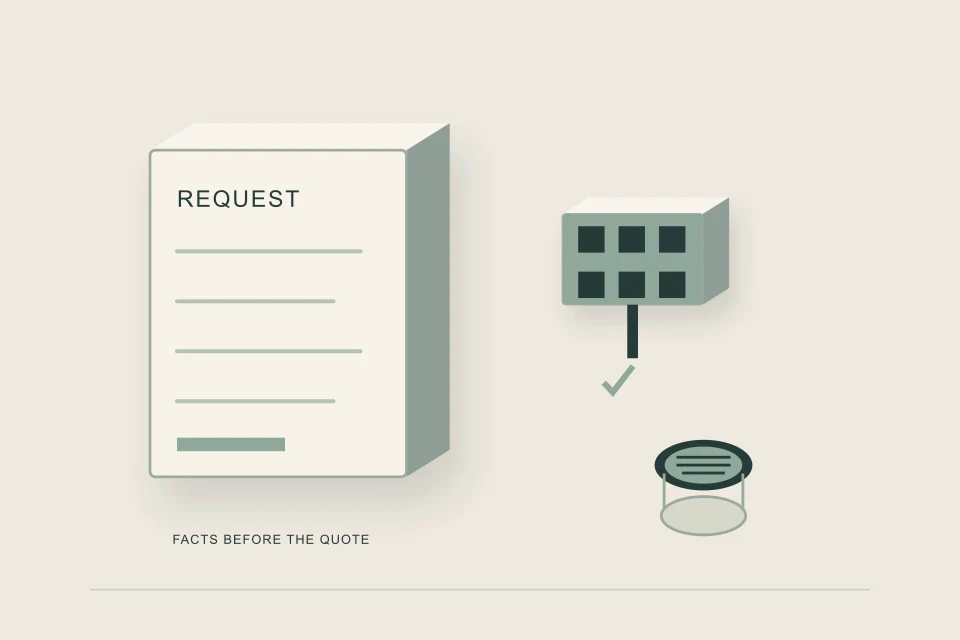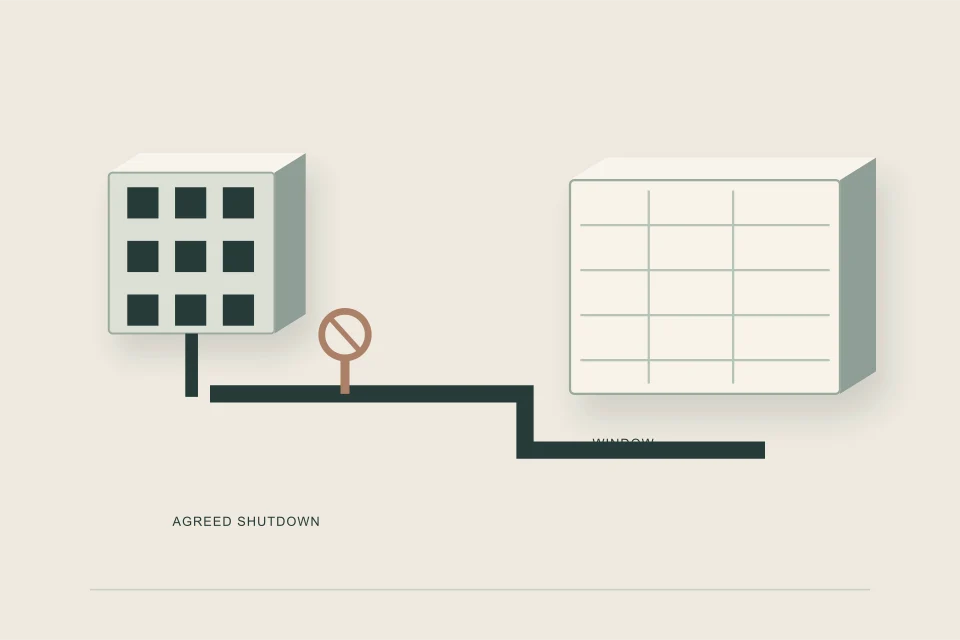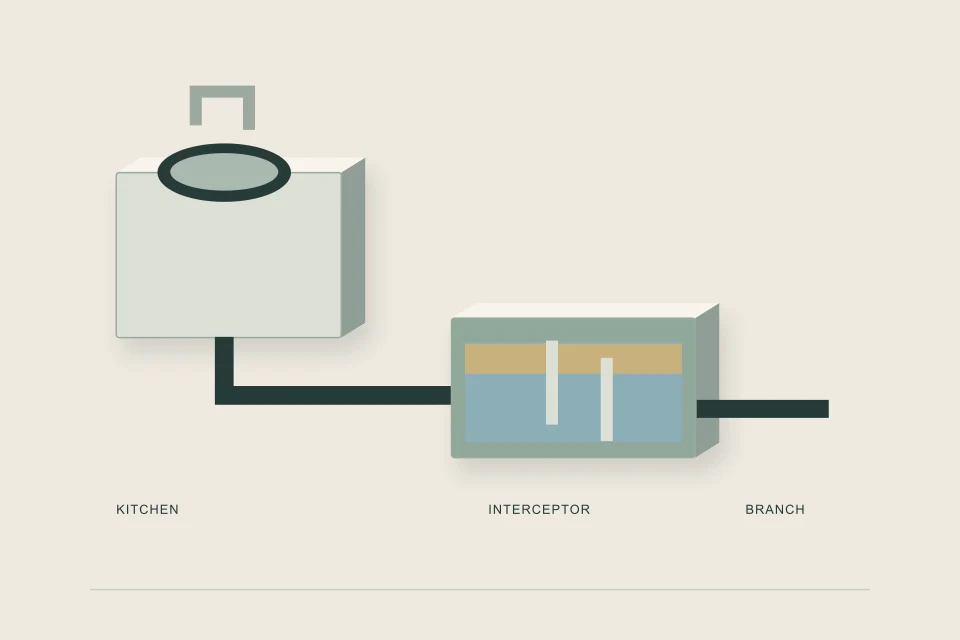
Treat recurring grease blockages as a system problem. Identify the kitchen branches, grease interceptor and downstream line; obtain the service records for each. Cleaning a blocked pipe and maintaining an interceptor are different tasks. A useful quote says which task is included and what evidence will show that it was completed.
- Name the kitchen branch, interceptor and downstream line separately.
- Keep regulatory interceptor servicing distinct from condition-based pipe cleaning.
- Record coverage and disposal alongside the service date.
- Compare recurrence with kitchen use before changing the maintenance plan.
01 /Map the path from kitchen to sewer
List which fixtures feed the troublesome line and where they meet the interceptor. Staff observations can help: which shift sees the issue, whether one sink or several drains slow together, and whether it returns soon after cleaning. Those observations are clues, not proof of pipe failure.
In Calgary, food preparation facilities that release fats, oils or grease are subject to grease interceptor requirements under the Wastewater Bylaw. Confirm sizing, installation and maintenance expectations with the City and the qualified contractor. The official food-service guidance is linked below; a drain-cleaning invoice alone is not proof that interceptor requirements have been met.
02 /Separate the service tasks
| Task | Ask the provider |
|---|---|
| Interceptor service | What is removed, disposed of and documented? |
| Branch drain cleaning | Which fixture-to-interceptor section is included? |
| Downstream cleaning | How far is the line cleaned and how is debris handled? |
| Condition inspection | What recording and limitations are supplied? |
Ask whether the technician has enough access to clean the intended section without forcing debris into another asset. Where pipe condition is uncertain, discuss camera evidence and method selection. High pressure is not itself evidence of better cleaning.
03 /Reduce interruption and preserve records
Arrange a work window with the kitchen manager, identify water-use restrictions and confirm which areas need to remain clear. Give the contractor an authorized contact who can approve a changed scope. Do not promise a reopening time until the work and any cleanup requirements are known.
Store the interceptor service record, line-cleaning invoice, inspection footage and staff incident log together. If the same restriction returns, those records help distinguish missed coverage, ongoing loading and a condition that cleaning cannot repair. Set any maintenance interval from actual findings and operating conditions rather than a universal monthly promise.
04 /Why can the sink run freely while the downstream line still needs attention?
Flow at one fixture does not establish the condition of every downstream section. Think of the kitchen route as several connected assets: a fixture branch, the interceptor and the pipe leaving it. A service record that names only the sink may leave the other two unanswered. Ask the provider to identify the actual start and end of each task. A sketch with uncertain connections labelled is more useful than an assumed diagram presented as fact.
The interceptor cutaway illustrates separate floating and settled material; it is not a drawing of your installed unit. Have the provider explain which components were checked, whether the outlet was accessible and what prevented complete service. If the same kitchen has both interceptor servicing and a drain restriction, retain two findings even when one company handles both. Otherwise the next manager may treat an invoice for one asset as proof that the whole route was examined.
05 /What does Calgary require for interceptor servicing?
Calgary’s current food-service guidance specifies interceptor servicing at least every four weeks, removal of the entire contents, thorough cleaning and component inspection. It also requires maintenance records for the previous two years to be available for inspection. Confirm the current requirements with the City for your establishment. The downstream pipe-cleaning interval remains a separate, site-specific decision; it should not be confused with this interceptor requirement.
Put the applicable requirement and its source beside the calendar entry. Ask the provider what record it supplies and who retains it when a tenant changes or the restaurant closes temporarily. A reminder titled “drain maintenance” is ambiguous; name the unit and the required task. Keep the contractor’s observed loading, access limitations and suggested follow-up with the record, so the owner can discuss whether additional servicing is needed without losing the regulatory baseline.
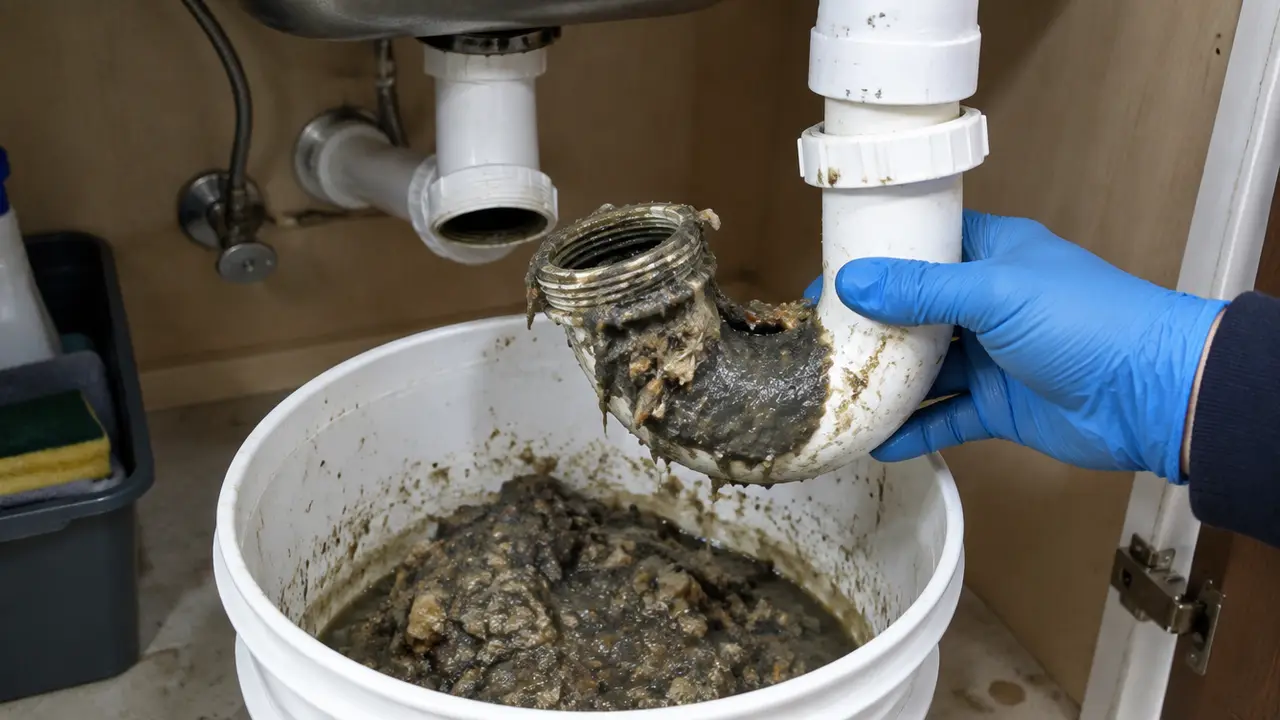
06 /Which observations make a recurring grease problem easier to investigate?
| Observation to record | Question it helps the provider answer |
|---|---|
| Only the prep sink is slow; other fixtures behave normally | Is the requested scope a local branch rather than the shared outlet? |
| Several kitchen drains slow during the same shift | Which common section serves those fixtures? |
| Interceptor service was completed, but no outlet check is recorded | What remains unknown beyond the serviced unit? |
| Restriction returned after a menu, equipment or occupancy change | Does the new operating pattern belong in the investigation? |
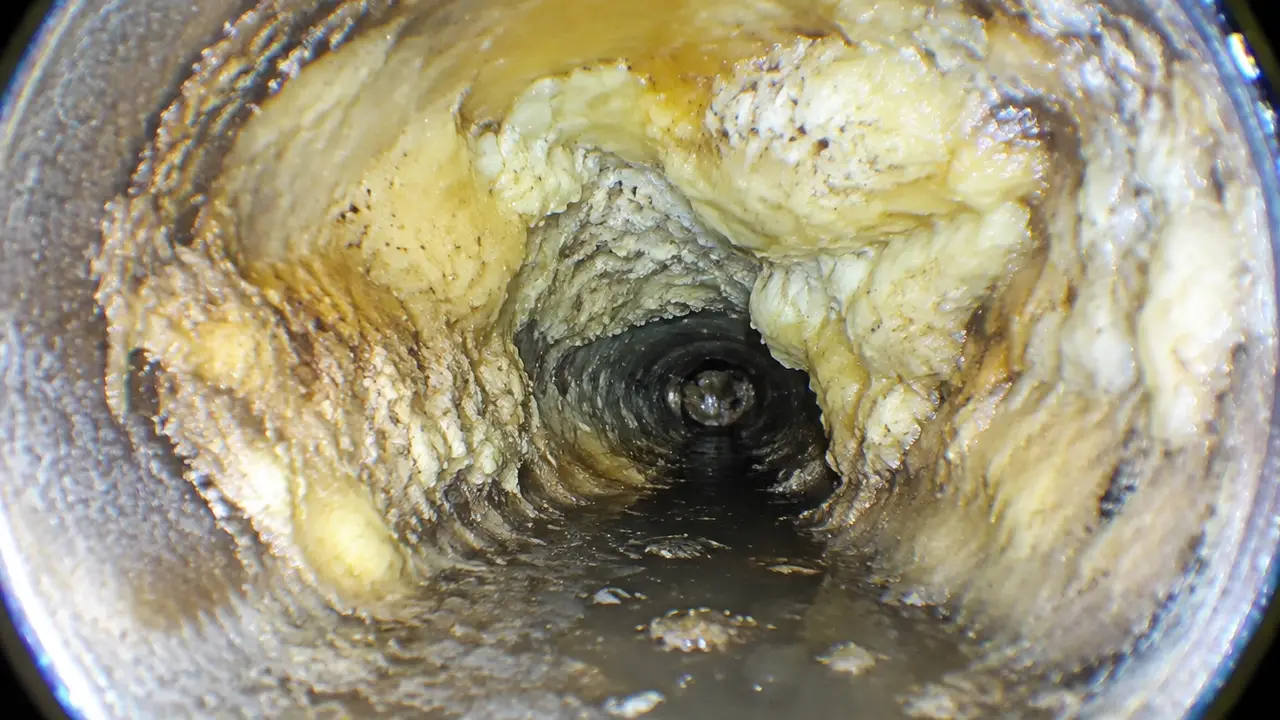
| Earlier video stops at a deposit | What evidence is needed for the unseen remainder? |
These entries describe observations, not diagnoses. Keep dates, service references and the source of each statement. A staff member saying “the trap was cleaned” should be linked to the actual service record before it is treated as completed coverage. Do not ask staff to reproduce a backup, lift a dangerous cover or test cleaning chemicals to collect evidence. The contractor can assess whether a camera survey, appropriate clearing or another access point is needed.
07 /How should a restaurant plan the service window?
Plan the appointment around the affected drainage route and the business operation. A preferred closing-time visit is only a starting point: the provider still needs safe access, equipment space and an agreed procedure for changes. Give the manager a list of areas requested for access and ask which fixtures may be used during the work. Do not substitute an informal “keep the kitchen quiet” instruction for the provider’s actual restrictions.
Before the visit, identify who can approve extra cleaning, an incomplete survey or a return appointment. Record the route from vehicle parking to the work area and any occupied space along it. Ask who will communicate updates to staff, protect customer access and review completion before the business relies on reopening. Where a pit, vault or manhole is involved, use a qualified provider’s access plan; nobody should enter one to save booking time.
08 /What should the completed service record say?
A useful record links each task to an asset, date, extent and result. For the interceptor, request the servicing record and any component concerns. For line cleaning, identify the section worked on, the method used and what limited coverage. For a survey, request the original recording and written observations. Ask how removed material was handled and which waste service or disposal arrangement was used; do not treat a generic “cleaned drains” description as all of these deliverables.
Keep open items visible. For example, “branch cleared; downstream condition not surveyed” is more useful than a site-wide completion claim. The manager can then assign the unresolved question instead of assuming it was included. Use a common asset name on the brief, quote, invoice and video. If a contractor uses a different identifier, record the relationship so a future provider can locate the same section without guessing which kitchen line was meant.
09 /When should recurrence change the plan?
Change the plan when the evidence changes, rather than extending the same instruction indefinitely. Compare the interval between symptoms, the assets previously serviced and any change in operation. A shorter interval may justify investigating missed coverage or a different section. A clear post-cleaning view may raise a condition question that routine cleaning cannot resolve. Have the provider explain what the next task is expected to reveal and how the decision will change after it.
Keep source control within ordinary kitchen practice and follow current City guidance; do not add agents to the interceptor to push material downstream. A review meeting can compare the recorded task with the original objective: restoring passage, completing regulatory service or evaluating a recurring restriction. Use the commercial brief builder to name that objective, then review the editable outline before sending a private quote request. An outline does not book work or confirm a provider’s arrival.
FAQQuestions people ask
Does monthly interceptor service include the sewer line?
Only if the agreed scope explicitly includes that line. Interceptor contents, a kitchen branch and a downstream sewer are separate assets and may require different equipment and records. Ask for the start and end of the cleaning or survey, not just the visit frequency. Keep statutory servicing requirements and the provider’s condition-based pipe plan identifiable in the same maintenance file.
Can hot water or additives replace interceptor cleaning?
Do not use them as a substitute for required service. Calgary’s food-service guidance prohibits agents intended to make retained fats, oils or grease pass through the interceptor. Have the qualified provider assess servicing and the affected route. Record what was removed and what was inspected; a temporary improvement in sink drainage does not establish compliance or downstream condition.
Should I authorize jetting before the contractor sees the site?
Describe the restriction and available access without prescribing equipment. The contractor should assess pipe condition, safe access and debris handling before selecting a method. Ask whether an initial recording, appropriate clearing or a later survey is included. Put the approval boundary in writing so an investigative visit does not silently become an open-ended cleaning or repair instruction.
What should a new restaurant operator ask the landlord for?
Request relevant route drawings, interceptor information, recent service records, earlier camera files and known access limitations. Confirm who maintains each asset under the actual lease and property arrangements. Do not infer responsibility from the pipe’s location alone. Record unavailable documents as unknown and make the provider’s first assessment address those gaps rather than inventing a complete network history.
NETWORKGo deeper across the HAUSE Sewer network
Restaurant grease interceptors and kitchen line cleaning
How restaurant grease interceptors work, pump-out frequency and the 25 percent rule, kitchen line jetting, service logs, and municipal bylaw checks.
SewerJetting.caCommercial and municipal sewer jetting: combination trucks, interceptors and schedules
Commercial sewer jetting explained: jet-vac combination trucks, high-flow mains cleaning, restaurant grease lines, interceptors and confined space rules.
DrainAugering.caHow to snake a sink drain from the trap arm, not the plughole
How to snake a sink drain: pull the P-trap, feed 1/4-inch cable into the trap arm, get it down the tee, and handle double basins and garbage disposals.